Monday, September 18, 2017

The End is Near

The reason we were hustling to arrive at Vuda Point Marina was that we had several major projects to accomplish, and Vuda Point was the only place with both the skilled labor and a reasonable supply of parts to get these things accomplished. Another advantage is the average hourly wage in Fiji is around US$ 2.00 an hour for unskilled labor. Obviously the guys working on the boat would be paid more, but it was a marked difference from the labor rates in French Polynesia.

For six years we've lived with our sagging headliner.  Our feeling was there are enough things that sag at this age, your headliner shouldn't be added to the list.

Much of the headliner was attached to removal panels that made the job a lot easier.
Our first project was to have the headliner in our boat replaced. Taswell’s are high end boats and the interior roofs are covered with an expensive foam-backed leather/vinyl headliner. The headliner was still in good shape, but the foam backing had disintegrated in the tropical heat so our ceiling was hanging like bunting at a political convention. The design of the ceiling consisted of mostly removable panels to which the headliner was (or used to be) glued. On the rest of the interior the headliner was glued directly to the interior surfaces. We had about 10 of the panels removed and recovered in Florida by a guy who did upholstery for Corvettes (and did an excellent job) but he wouldn’t touch any of the headliner held up by teak trim pieces. He said all the interior teak would have to be removed (I can’t imagine what the cost of that would be, but $10,000 wouldn’t surprise me). The guys at Marshall Sails said they could work around the existing teak, so that sounded good to us.

Our faithful installers, Sandeep and Bakesh, worked very heard to ensure the headliner job went as smooth as possible.
In the end a couple of pieces of teak got cracked a little, but considering this was almost an impossible job to begin with, we were very happy. Each day Brakesh and Sandeep from Marshall Sails would come and remove a little more headliner, sand the remaining glue from the boat interior surfaces, and then go back to their shop to cut the new pieces from a 25-yard bolt of Majilite headliner that we had air freighted from the US (don’t even ask how much that cost). Over a very arduous three-week period they completed the job and the interior now looks brand new.

The next project was to replace the dodger and bimini. The dodger was already covered with so many patches that we looked like the sea-going Clampetts with Jed and Jethro on the helm, and was so threadbare that merely touching it would cause the fabric to part like the Red Sea. We contracted with Marshall Sails again, with whom we’d been in contact with for several months, but naturally they only start your project once you arrive and they are finished with their previous jobs. The price quote was very reasonable, but they figured around a month and one/half to complete the project. Ugh.

Tuks with a big smile as this difficult project comes to an end.
A very mild mannered Fijian named Tuks was the project lead and did a great job of replicating our old dodger. Once that was completed he started on the bimini, adding some extras like plastic side zip panels so we wouldn’t get drenched by big waves breaking over the side of the boat during passages. The bimini took about two and one-half weeks, much quicker than we anticipated, but still putting us way behind on our schedule.

The major project, however, the one we hadn’t anticipated and the one that would break the bank was getting a new transmission installed. If you remember, we buggered up our old transmission when we helped out another cruiser in distress and towed them into port in Tonga. While the transmission was still working, you could tell something wasn’t right as I shifted gears and motored along there was a slight thumping felt in the floor of the cockpit. Given all the narrow passes, lined by treacherous reefs and beset by strong currents, it just wasn’t worth taking the risk of sailing all the way to Australia with a wonky transmission.  
Timo, the crazy Italian who runs the yard, supervises the haul out of Flying Cloud.

As much as we hate being on the hard at a boat yard, this one wasn't too bad.
 We arranged with Baobab Marine in Vuda Point to install a new transmission. Our old transmission, a Kansaki KBW20, was no longer made nor were parts available. The only transmission that would fit was a rather expensive ZF 30 M from Germany. We ordered one from Australia and planned to have it shipped by sea, but that would take too long so they air freighted it. Despite the fact we were paying a fortune to have the 100 lb transmission send by air, the airline was nice enough to off load it two days in a row to make room for passenger’s bags. Wonderful.


How Anil manhandled this heavy transmission down the companionway steps and into the engine compartment is beyond me.
The other snag was we had to have the boat hauled out of the water since Baobab didn’t want to assume the liability of the boat sinking at the dock if something went wrong. If you hear the clink, clink, clink of money departing our already meager bank account, you understand how we felt as we were informed of each new glitch in the process. 
Once out of the water we discovered a heavy support structure in the engine compartment would have to be removed, along with our complex refrigeration system that rested on the structure. Clink, clink, clink. We came to a compromise where they cut the shelf in half with a grinder and would bolt it back together, saving us the considerable cost of removing the refrigeration unit.

Once that was done thing everything proceeded fairly smoothly. We hauled the heavy transmission up from the ground using our outboard motor hoist, which helped tremendously. Once it was wrestled down below, it actually fit in the space fairly well. We had to saw off the end of a fiberglass oil pan beneath the engine, but that was the only modification we had to make. Because this transmission is water-cooled (our old one wasn't) we had to run water lines between the engine and the transmission. Naturally the water lines were of two different diameters, sending one of the Babobab guys to town to try and find a reducer bushing. With none to be found in Fiji he returned with a cylinder of 1 1/2" bronze, which they took to their machine shop to make a bushing. Amazing.
Our shiny new ZF 30 M transmission in its new home. You can see how we had to saw off the end of the fiberglass oil drip pan to get the transmission to fit.
The problems came when they hooked up the linkage and no one could figure out if the boat would go forward when the shift lever at the helm was moved to the forward position, or in reverse?  This is a fairly frequent issue when replacing one brand of transmission with another. So the plan was I’d turn the ignition switch (called a bump) to see which way the shaft would move. Unfortunately I didn’t realize someone had left the gear in forward and moved the throttle to the wide open position, and the engine took off like a screaming banshee (remember, we’re not in the water). I hit the red stop button immediately but nothing happened. I’m sure the guy on the ground watching the prop turn like a buzzsaw was scared as hell. The mechanic and I ran down below and I remembered something another mechanic had told me about a “runaway” engine situation. I quickly grabbed a thin red cord and yanked it, and the engine stopped immediately. I remember the mechanic (Martin, the crazy Austrian) who rigged the cord saying “Someday when it happens to you you’ll remember me saving your butt.” Thank you Martin.
Fiji is located in the middle of the cyclone belt and gets hit every year. Vuda Pt. engineered a neat solution where it digs pits in the ground for the sailboats keels, greatly lessening the chance of damage during cyclones (hurricanes).

When we went back into the water we carefully tested the forward and reverse positions of the transmission and thank God they were correct. Makes my life much easier especially when we’re trying to sell the boat in two months.

As long as we’re talking about replacing things, our second to last project was replacing 
two of our sailing instruments, Raymarine ST60 Speed and Depth display units. They have LED displays, and like everything in the tropics, the heat slowly kills the displays so the gray goes all black, making it impossible to read the numbers. Since a Depth display is super important, we had to find a solution. 

Naturally the Raymarine ST60 series of instruments had been discontinued and the company no longer repaired them. Thanks to a website called The Boat Galley, we learned of a guy in Colorado who replaces the LED displays. We contacted him and on our first day at Vuda.  Meryl shipped the two instruments back for repair. He did a great job restoring them and thanks to help from our good friend Anni in Frisco, CO got them shipped back to us in Fiji. The only other alternative would be to order two new instruments, at about $400 each, and then buy adaptors for the wiring network since Raymarine had changed all that with the new models.

Our last project was replacing our dead 2 hp Yamaha with a new outboard we had purchased in New Zealand over the Internet. The purchase went very smoothly and the NZ shop put it on a ship bound for Fiji. Since we were still very busy we didn’t worry about the engine until several days after it’s planned arrival date and we hadn’t heard anything from the shipping company. With the help of the very smart Nikki at the front office of Vuda Point we tracked down the shipping agent and thought we’d made arrangements to have the outboard delivered to the marina. 

After several days and no outboard we contacted the shipping agent again who politely told us Customs would release the motor as soon as we gave them our Tax Identification Number, something used by Fijian businesses. It took three days to convince them that we were 1) not Fijian citizens, 2) not a Fijian business, and 3) had provided all the proper documentation for it to be imported. The long and short is we finally got the motor delivered, along with a highly creative bill from the shipping company whose fees exceed the shipping costs from New Zealand. As they say, they got you by the short hairs. 
To say the five weeks in the marina working on all these projects has been stressful is an understatement. Yesterday we walked around the corner and went to the neighboring resort and gave ourselves a relaxation day.
The difficult thing during all these travails is that Fijians are incredibly polite. They strongly dislike confrontation and will go to great lengths to keep everyone happy. If it makes you feel better to hear that the part will arrive tomorrow, they will tell you that although it’s relevance to the truth may be stretched. It’s kind of hard to lose your temper, however, and yell at them under those circumstances. They are also very honest and many times when you think you’re getting screwed it’s just the way the system works. You learn to go with the flow in the South Pacific, or go completely nuts. It’s your choice.
With all the projects completed, we’re now getting ready for an early morning departure up to Waya Island where huge manta rays gather in the pass between islands. We’ll next sail north to the famous Blue Lagoon, spend a few days there, then make our way back down island ending up a the equally famous Musket Cove, a mecca of sorts for itinerant sailors from around the world.


We’ll then head back to Vuda Pt. Marina to get ice cream bars and clear out with Fijian Customs, and begin the 500-mile sail northwest to the fabled islands of Vanuatu. If you like eclectic books, I’d highly recommend the book Getting Stoned with Savages by J. Maarten Troost https://www.amazon.com/Getting-Stoned-Savages-Through-Islands/dp/0767921992/ref=asap_bc?ie=UTF8.  According to our friends already in Vanuatu, the book fairly accurately describes the crazy ambience of Vanuatu compete with highly active volcanoes, aging cannibals, frequent earthquakes, major hurricanes, and a third world country with a high cost of living and 58 banks.

Monday, August 28, 2017

Day to Day Life at Vuda

The only negative we’ve found about Vuda Point Marina is that the constant coming and going of boats keeps us up at times as a neighboring boat leaves and a new one arrives. You need to carefully monitor your fenders, lines, and in our case, our large solar panel array as new boat shoehorn their way into place. You go bow into the shore and use very long lines off the back tied to a central anchor to keep the boat in place. As the tide goes up and down the distance of the bow to shore changes, making for some tricky late night jumps to get back on the boat.

To escape the work being done on the boat we hang out at The Boat Shed
In between repair jobs, we do get to relax and socialize. Our first night in Vuda we ran into Florian and Martina, an Austrian couple on Esperanza who we’d met via the Mag Neg SSB network. We attended 1/2 pizza night at The Boat Shed Restaurant, the local hangout at the marina.

From L to R:  Kathi, Wolfgang, Maria, Maurice.
Next Plastik Plankton, another Austrian boat with Dr. Kathi and Wolfgang arrived. We treated them to a nice dinner at the Boat Shed in thanks for everything they’ve helped us with over the last year. The next day we took the bus into nearby Nadi with them to explore and get some groceries and fresh meats from South Pacific Meats. It’s great fun being around younger people (they are both younger than our kids!) for their positive attitude and energy levels.

Exploring downtown Nadi.
The Nadi Market had a great selection of fruits and vegetables.
If you've ever shopped with Meryl you know what this woman is thinking.
These peppers are so hot you could cook with them without using the stove.
These ladies were wonderful to talk with.
I loved this booth since the lady in pink actually balances the tomatoes upon each other -- no toothpicks where used to hold them in place. Plus she taught me how to say "thank you" in Hindi.
Next came Maurice and Maria from Toronto on Captiva. We went next door to the First Landing Resort (actually the location of the first settlers to arrive in Fiji) for a great dinner and dance show. 

We enjoyed the meke dance show at the First Landing Resort with Maurice and Maria.


We also had a great dinner at the Eshaa Restaurant at the high end Nila Resort just down the beach. We were going to walk down but a local guy didn't want us walking at night so he gave us a ride. Then we found they were shooting a "Bollywood" movie which was fun to watch. Finally the restaurant served some of the best Indian food I've ever had. Excellent.

At Eshaa Restaurant we had excellent Butter Chicken, Lamb Curry, and naan and riata.
I was photographing this and the guy invited me down to explain this was to celebrate Ganesh, a large festival that takes place in Bombay. At the end they put the seashell lamps in the ocean and watch them float away.
They were filming a Bollywood production at the resort and had over 300 cars lined up for a scene. Someone said that was basically all the rental cars in Fiji!
Today our friends from Oklahoma, Charlie and Jenni, arrived on their Catalina 47 called Lady. We had lunch with them yesterday and will go to 1/2 pizza night at the Boat Shed (do you see a trend here?).


All in all we’re enjoying our stay in Vuda and hoping we have a penny left in our bank accounts when this is all over.

Saturday, August 19, 2017

Who Do Vuda? We Do Vuda!

After our brief one-day stay at Port Denarau, we motored five miles due north to our new home for the next one and one/half months at Vuda Point Marina.  The bad news is we have to stay here a long time to get much needed work done on the boat. The good news is it’s a great place to be stuck.

View of Vuda Point Marina from atop our masthead.
The very popular Boatshed Restaurant is on the point at the top of the photo.
Vuda Point Marina is essentially a big circular pond, but very well protected from wind and waves. It is normally full, so we had to wait outside for several hours until a slip became available. You then enter a narrow, but well-marked channel and follow a chase boat to your “slip.”  It is interesting to note that your “slip” won’t appear as a slip, but usually as a slightly wide crack between two boats that you slowly motor into as your beam wedges the adjacent boats out of the way. The whole thing, as Meryl describes, is like a giant accordion that expands and contracts as boat come and go.

Our first slip was a bit away from the bathrooms and stores so we moved closer in the next day, and were delighted when our Austrian friends Kathi and Wolfgang on Plastik Plankton pulled in right next to us. A day later new friends Maurice (French Canadian) and Maria (Italian) on Captiva pulled in on the other side. It was like old home week all over again.

Our reason for coming to Vuda was to take advantage of the relatively low labor rate in Fiji and the number of well skilled (compared to the rest of the South Pacific) workers to get projects done. A short list (but not complete) of what we had to accomplish included:
  • Repair Speed and Depth instruments
  • Replace sagging headliner in boat
  • Repair Yamaha 15 outboard
  • Replace Yamaha 2 outboard
  • Replace high water alarm
  • Replace engine room light
  • Replace Command Mic at helm
  • Replace hose and repair aft head
  • Replace transmission
  • Replace bimini and dodger
As you can see, it’s not going to be a fun or inexpensive month here. So first things first:  Meryl took a cab out to the airport to FedEx to ship our Speed and Depth instruments whose LED screens were too clouded to read. It’s common for anything with a LED display to fail in the tropical heat. Luckily we had found a guy in the US who repairs them (the Raymarine ST60 instruments are no long made, sold, or repaired) so we’re looking at a two-week turn around. And you can’t have a boat here without a depth meter.

Next we contacted Baobob Marine to see about repairing our transmission. It took them a couple of days to respond but they said parts for our transmission are no longer available (is this sounding like a trend?) so we’d have to buy a new transmission, but first they’d have to see if someone actually makes a transmission that will fit our engine. Luckily they found a ZF model that will work and we ordered it out of Australia. They were supposed to ship it via ship but that would take too long, so we decided to air freight it, only to find out that it got bumped off the flight (sounds like us when we fly) to put on additional passengers. And so it goes.

Next problem was the outboard motors. Our little Yamaha 2 hp engine (30 years old) had been the best engine we’d ever owned. It always started on the first pull, but when we took it to an outboard guy in Suva (Frances) he found the impeller and housing were severely corroded and would need to be replaced. Again, trying to find parts would be a challenge, time consuming, and expensive. We found we could buy a new engine out of New Zealand for about US$700, but they called the next day and said it would only be $500 since there would be no GST tax as it was being shipped out of the country. We can’t pull our dingy up on a beach with the heavy 15 hp Yamaha, so this was a no brainer. Should arrive next week. Frances boxed up all the parts of our old 2 hp motor and we took them with us.

Meanwhile we called Frances’ buddy in Vuda, a guy called Tom, who could work on our 15 hp motor, which had not run right since it was stored for four months at Raiatea Carenage. Tom quickly found that the problem wasn’t a clogged carb like we thought but a defective coil (which had to be ordered from New Zealand and whose price you don’t want to know). When he brought it back we tested it on the dingy and we went flying out of the marina. Since previously we were just put putting along it was a huge improvement. We gave Tom the old 2 hp Yamaha as a gift for helping us out.

Sandeep and Brakesh carefully glue the new headliner in place.
The old headliner was puckered and hanging down.


Many of the panels were Velcro'd to the ceiling and dropped down for access to the wiring. I had to redo all the wiring with quick disconnects for easier access.
 Next we arranged with Marshall Sails to replace our headliner. The bid wasn’t cheap but I have to say they are doing an incredible job. Everyone else we talked to said we’d have to remove all the teak trim in the inside our boat, which I figured would be at least a $2,000 job alone. These guys have been able to carefully remove the old headliner and install the new material without removing the teak. The original problem was the headliner has a foam backing, and the foam disintegrates in the tropical heat. The actual nylon backing on the foam tenaciously stays stuck to the wall, however, so it has to be sanded down to give the new stuff something to bond to. It’s taken over a week but what a difference the new stuff makes. Previously we thought we’d been living in a Bedouin tent with our saggy ceilings.

Ever since we were in the South Pacific large yellow wasps would slowly cruise around the inside the boat. We later found that one had set up house keeping on the back of our curtains.
As far as the bimini/dodger goes, they won’t be able to start on the bimini and dodger until next week, and it will take three weeks so we’re stuck here for longer than we had hoped.


The other projects, replacing the high water alarm, the engine room light, and the command mic, were quickly accomplished once I received the parts from the States (nothing seems to be stocked here in Fiji). I was shocked when I placed the order with Fisheries Supply in Seattle on a Thursday and the package arrived on the next Monday. I guess we just got lucky for once.

Tuesday, August 15, 2017

Port Denarau and Civilization

We got another early morning start from Robinson Crusoe Island, fortunate that the tide was low so we could easily see the adjacent reefs. The sail north west up the coast was wonderful with a 15-knot wind tailwind so we could fly our downwind sails. As we entered through Navula Passage were now inside the reef and could breathe a sigh of relief (for awhile). We still had another 14 miles to go, but it looked like a no brainer as we had waypoints from a trusted source (Curley) in Savusavu. 


We rounded Pt. Denarau through a narrow passage and began to see the vestiges of society:  large resorts lining the shore and jets skis zooming by. We became a little to engrossed in all this because when I looked down at our depth sounder (remember we’re still following the trusted waypoints) I saw our depth was only eight feet, leaving us only two feet to spare. A quick turn to the north got us in a little deeper water but we realized the whole bay was fairly shallow.

Port Denarau is the home to super yachts and cruise boats that service the tourist industry.
The very high-end marina at Port Denarau was full with boats so we anchored outside with about 20 other sail boats and took the dingy in to explore the port. I wasn’t paying close enough attention to the layout of the marina and promptly dinged the bottom with our prop, but luckily it was just mud. That made the depth less than one foot. Got to be careful around here.

We spent the afternoon exploring the marina and shopping for some much needed parts. We found a yacht chandlery that had the exact Shurhold boat hook we’d been searching for (lost ours in the storm off Tonga) and another store had some dive masks to replace my leaky one. We then had a great lunch at Cado's Restaurant, enjoying the leisurely time to just sit and enjoy watching the tourists. Port Denarau is close to Nadi Airport (pronounced Nandi but spelled Nadi) and most tourists come to Denarau to board fast ferries out to the resorts in the Mananuca and Yasawa Islands.

Jacks of Fiji is much like the ABC shops in Hawaii, but actually has great prices on "bula shirts" and other items.
After lunch I patiently tagged along as Meryl shopped in the various stores in the Port Denarau Mall where she bought presents for various people back home. We even managed to find some good ice cream at a local shop, somewhat of a treat when you’re on a cruising sailboat.

A wonderful hour.
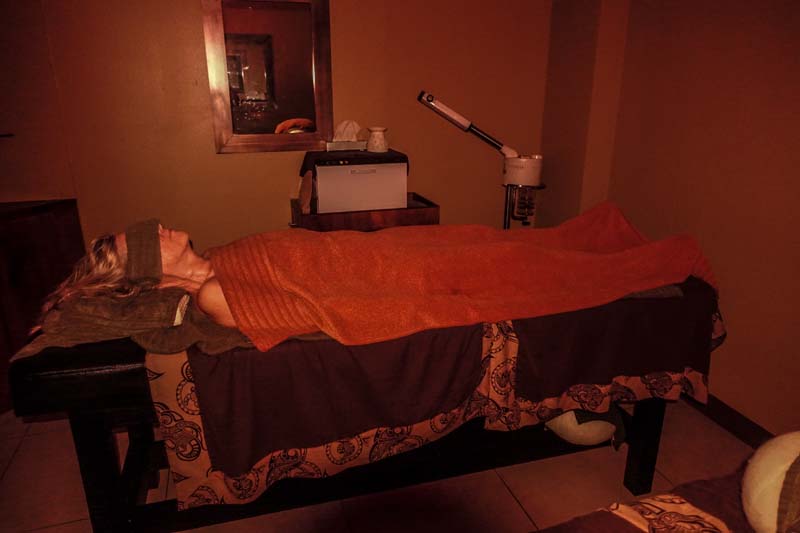
Still not ready to go back to the boat, we casually walked into the Oasis Spa just to look at the prices (very reasonable) and ended up getting a “Couples Massage” for one wonderful, blissful hour. I can’t tell you how much we both needed that. Our poor bodies get so banged up sailing the boat and maneuvering around tight places that I’m sure the masseurs thought we beat each other given all our black and blue spots.


We then (carefully) motored the dingy out of the yacht basin and back to the boat where we enjoyed a good dinner and a beautiful sunset.

Sunday, August 13, 2017

Robinson Crusoe Island

We really enjoyed our stay in Suva so leaving was not as easy as we anticipated. We departed early on Aug. 9th for Vana Nui,  a bay 37 miles to the east along the south coast (called the Coral Coast) of Viti Levu. With a 14-knot wind off our starboard beam we had a wonderful sail under the azure blue skies of the Fijian Islands. Our stop in Vana Nui was only an overnight, as the next day we got another early start for the 46-mile sail up to Likuri Harbor and Robinson Crusoe Island.

This shows the total route from Suva to Likuri (Robinson Crusoe Island). The stop in Vana Nui was just about 1/2 the total distance.
The entrance to Likuri was described by some as “very tricky,” but we arrived at low tide so the location of the entrance reefs was very obvious. Interestingly, on our C-Map electronic charts the track showed us going directly over the western-most reef. Kind of unnerving after a long day of sailing. Luckily we were also using Ovital, an iPad-based mapping system that overlays the position of our boat (using GPS) on a Google Earth chart, which showed us in the middle of the passage.  
We had to anchor some distance from Robinson Crusoe Island's shore since it’s very shallow all around the island. Plus the wind had picked up and was blowing a steady 20 knots causing us to let out lots of chain (easy to do in shallow, bommie-free water) for added security.

We had planned to go into the island the next day but it was now blowing too hard for us to safely take the dingy off the foredeck, so we just hunkered down and enjoyed the good Vodaphone Internet via our iPhones and researched our route ahead to Vuda Point Marina in the next several days.

The next day the wind still hadn’t let up so we ended up calling the resort to have one of their taxi boats come out and pick us up for dinner.  Robinson Crusoe is famous amongst cruisers for it’s excellent dinner and dance show and we were told not to miss it.

Just as our boat was landing on the beach several other taxi boats arrived from Denerau loaded to the gunnels with tourists from the other Coral Coast hotels coming to see the show. It was weird being around so many “tourists” (compared to the cruisers we normally socialize with), but I’m sure we fit in well with our cameras hanging off our necks.

The show began with a demonstration of the traditional sevusevu ceremony which is used when you ask permission to anchor or visit villages in the Fijian Islands. You are supposed to bring a bundle of kava (from the pepper plant, called yaqona in Fiji). It is pounded into a powder and then decanted through a muslin-type cloth to produce a drink reminiscent of dirty dishwater (and with a similar taste). In the ceremony you sit cross legged facing the chief, clap your hands once, then down the small 1/2 coconut bowl of kava in one swallow. Apparently after several bowls you get a mild narcotic effect and your lips get numb. We haven’t tried it yet but we will as we visit the more remote islands and villages.

The villagers uncovered the lovo underground oven and loaded the roasted potatoes into the serving dish. Watching the tourists was also an interesting activity to those of us living in small, floating objects.
We then watched as they uncovered the underground oven, called a lovo, where they slow cook breadfruit, potatoes, squash, and pig all day long. After removing the food they did a demonstration of fire walking over the hot coals, which they verified by pouring water on them producing an instant cloud of steam. I don’t know how they do it, but it was impressive.

A buffet dinner was then served and we fought off the tourists to get our fair share (after all, they have big resort dinners every night). It was delicious and we resisted making pigs of ourselves and going back for seconds.

On occasion they dropped the flaming torches so you didn't want to sit too close.


After the dinner the dancing part of the show began. It seems most Fijian dancing is done by the men, compared to the predominate female dancing in French Polynesia. The show at Robinson Crusoe Resort was nice because the dancers were local villagers, not the professionals you get in Hawaii and other areas. The highlight was the machete dancing with twirling knifes (and occasional dropped ones) and the fire dancing with lit torches. The culmination of the night was a presentation along the seashore of bolo type devices soaked in gasoline and swung in a large arc. Very spectacular and very difficult to photograph.  All in all a great evening for a surprising reasonable amount of money.

The grand finale on the beach was really quit spectacular.
To get back to our boat we had to commandeer a boatload of Fijian workers being taken back to the homes across the bay, but they were very friendly and all greeted us with a hearty Bula Bula as we boarded.  They dropped us off on our boat with the waves crashing against the sides but everyone took it with a grain of salt, after all, they were Fijians.


Tuesday, August 8, 2017

The Zig Zagy Path to Suva

It was very difficult to leave Savusavu, one of our favorite South Pacific ports, but we needed to get to Vudu Marina as soon as possible as we had a lot of work scheduled for the boat.

Red line shows our direct southeasterly route to Savu. The small blue arrow on the western coast is our final destination, Vudu Pt. Marina.
We debated multiple options for the trip: southwest to the magical island of Kandavu, taking the reef-strewn but protected route around the top, or the more direct route along the south coast of Viti Levu. Since we wanted to arrive as soon as possible we selected the direct route, content to put up with the heavier winds that are typical on that route.

At 11:30 am on Aug. 2nd we departed Savusavu, sailing along the long protective reef to Point Passage, across the channel, and then southwest zigzagging between smaller islands and reefs on our way to Suva. We really didn’t want to sail this route as we’d be passing the most dangerous and difficult-to-navigate reefs in the middle of the night, but because of the distance there was really no way to avoid it.  
As the wind calmed down a bit we got to fly our beloved Code Zero sail wing on wing.
Since there was little wind in Savusavu when we departed, we were surprised when we got hit with 20 knots + winds and four- to five-foot seas just outside Point Passage. Apparently the wind always accelerates between the two big islands of Fiji, Viti Levu and Vanua Levu, but we didn’t think it would be this strong on such a light wind day.

As we approached the tricky part that night, the wind lightened up a bit and I was glad to see that the lights on all three islands, Wakay, Batiki and Cakau Momo were functioning and their positions in agreement with our MaxSea charts and Ovital / Google Earth overlays. Still it was little unnerving to be threading our way through these narrow passages at night and I breathed a huge sigh of relief as we put them astern.

As we were approaching Suva the next morning, I was forward getting ready to lower the main sail when I heard Meryl gasping and making ohhhs and ahhhs sounds.  I rushed aft only to see her pointing abeam the boat where, less then 100 feet away, two huge humpback whales jumped in perfect unison completely clear of the water and landed with a huge “whump” in the water. It would have been the picture of a lifetime, but I couldn’t get to my camera quick enough. They continued to breech as they grew more distant from us and we were both “gobsmacked” as the British would say.

We entered Suva between two huge reefs (typical for all Fijian ports) and were struck by the number of derelict Chinese fishing boats rafted together in the harbor. We tried to hail the yacht club for information on mooring buoys but got a garbled response and decided to just anchor some distance off the club among the tug boats and fishing boats. We were pleasantly surprised to see two boats we hadn’t seen since the Panama Canal, Lady and Il Sogno.

Downtown Savu with Dixon, our phone repair store, on the right.
After getting things stowed we stopped by Il Sogno to say hi, and then proceeded into the Royal Suva Yacht Club where we tied up at the dingy dock. Walking across a very busy street we caught a taxi and told the Indian driver we desperately needed to find a mobile phone repair shop since both our iPhones were kaput. Amazingly he dropped us off at Dixon's downtown and they said they could not only replace my dead battery but also replace Meryl’s defunct charging port. Thinking it would take weeks to get parts, I asked them when we should come back. The Chinese guy looked up with a quizzical expression and said “Would an hour be soon enough?”

We roamed around the shopping area, the smaller diverse stores reminding us a little of Hong Kong in the early days, and then over to the air conditioned McDonald’s where we celebrated with a hot fudge sundae.

The iPhone’s were fixed when we returned (about $US 40 per phone) and we were like two giddy kids having our phones functioning again. We took a taxi (US$ 2) back to the yacht club and headed out to Il Sogno to have a beer with Craig and Corine. Craig was the chief cameraman for NBC News in New York and has the most incredible stories to tell. He was one of the first journalists embedded with a combat unit in Desert Storm and was with Donald Trump for several months working on a documentary. His stories of Trump and family only confirmed my worst fears.

Reunited after two years (from L to R): Charlie, Meryl, Corine, and Craig.

Charlie modeling his sulu skirt that Fiji men wear as a matter of respect when around village chiefs.
That night we all met on Lady where Charlie and Jenni hosted us for a delicious tuna niciose salad. We stayed up late that night telling stories and enjoying each other’s company. Since we were all around the same age, it was a little like being back in the college dorm in the ’60’s.

A great lunch of BBQ port sliders and turmeric fish dish at Governor's Museum Restaurant.


These two beautiful Indo Fijian women didn't mind us peaking over their table to look at the historic photos on the wall.

The restaurant also features posters from all the famous movies filmed in Fiji, along with the film location.
On Friday we headed back into town to a restaurant Charlie and Jenni had recommended, the Governor’s Museum Restaurant. It was the former residence of Fijian High Chief and Pacific statesman, Ratu Sir Lala Sukuna. With large, lazy fans swishing overhead, I was waiting for Joseph Conrad and Somerset Maugham to saunter into the dining room. It was an absolutely delightful place with excellent service and historic photos lining the walls. While a little embarrassing, we’d sidle up to a table with  people enjoying their lunches and lean over to read the captions on the photos. No one seemed to mind. 
Large Fijian sea-going canoe.
After lunch we took a cab down to the Fiji Museum, where artifacts dating back 3,700 years trace Fiji’s founding, colonization, and history. The museum houses a large Fiji seagoing canoe, artifacts from ancient civilization, and an interesting display of Fiji’s biodiversity. My favorite display was the the rudder from HMS Bounty, famous for the movie Mutiny on the Bounty which we had just watched the night before.

That night we met the crews of Lady and Il Sogno for drinks and dinner at the Royal Suva Yacht Club (RSYC). The RSYC is not a blue blazer and yachting tie type of club, but one favored by locals and yachties alike for it’s great food and friendly staff. It was fun to be out under the palm trees on a balmy night enjoying the company of long lost friends.

The next day we took our faithful, but non running Yamaha 2 hp outboard to James at the yacht club for repair. He’d been highly recommended and we had high hopes for a fully functioning outboard in the next few days. But we later found out our trusty outboard needed a new impeller, housing, and other hard-to-find parts, and found that a brand new motor from New Zealand (thanks to the exchange rate) could be purchased and shipped to Fiji for just over US$ 500. Was a no brainer decision since we can easily sell it when we get to Australia.

Wide variety of handicrafts at the Handicrafts Center.


We then visited the Handicraft Center in downtown Suva, feeling like we’d been out sailing for almost six years and had little in the form of handicrafts to show for our time. There were long rows of stalls, extremely friendly and helpful vendors. After visiting all 70 stalls (if you’ve ever shopped with Meryl you will understand this) we settled on a kava bowl, a cannibal fork, and some nice tapa purses for gifts. I would have loved to get a face mask or a Fijian war club but we have nowhere to store anything on the boat.

Amazed at the modern equipment in the Fijian dentist's office.
Using state of the art software the dentist reviews Meryl's teeth with her. As he moved the cursor the area would be magnified for an excellent view.
On thing we were highly remiss in was dental care, so we searched out a local dentist and made appointments for a teeth cleaning the next day. Dr. Singh’s office was modern and the staff very professional, and we both had full mouth X-Rays (which he emailed to us later) and a teeth cleaning. It was not as cheap as we’d heard in early years, but at $90 a piece it was still a deal.

It was difficult to chose among the wide variety of food offerings at the top of Tupo Center
With our newly shining teeth we headed over to one of two mid-rise buildings downtown and proceeded to the top floor with it’s well attended food court. There were a few hamburger places, but mostly Indian, Chinese, and Thai food. You can get a very filling lunch here for about US$ 5, so we settled on a huge plate of Phad Thai that we shared.

The Suva Market had a huge variety of fruits and vegetables available.

Here Meryl is negotiating for bundles of kava root (pepper plant) that we will offer to village chief on the various Fijian islands we visit. The kava is processed into a mildly narcotic drink favored by the Fijians.
Fiji is an interesting society, with the native Fijians and a large population of Indians who were brought in to work the sugar cane fields in the late 1800’s. The Indians eventually gained their freedom and opened a myriad of small shops and other ventures. Similar to the Chinese, the Indians are excellent businessmen and it was a pleasure to be somewhere with attentive service from the shopkeepers. There is still a level of animosity between the very successful and hard working Indians and the local Fijians, but things seem to be at a point of peaceful coexistence right now.

Nearing our departure date, we headed out to a large Cost-You-Less store on the outskirts of town. Like a mini Costco it had a good supply of various foods, including some American brands, so we stocked up on as much as we could carry. We then had our taxi driver wait while we visited the huge downtown market where we bought kava roots that we will present to village chiefs as we visit the more remote islands later in the month.


It is interesting that some yachties don’t like Suva, but we enjoyed our time there and wished we could have stayed longer.